

Health coaching is a growing field that offers versatility and multiple income stream opportunities. However, there’s a good chance you became a health coach because you’re passionate about health and wellness — not because you wanted to run a business.
One challenge many health coaches face is figuring out how to make enough money not only to survive, but to thrive in the career they love. The good news is that you don’t need an MBA to build a flourishing health coaching business. By learning and implementing a few business best practices, expanding your reach, and creating a strong foundation, you can build the financial stability you need.
The Key to Making Money as a Health Coach
The key to making money in any business is having paying customers. In health coaching, your clients are your customers. Most coaches enter the field because they have a passion for helping people. We get it — you started this career to support others, not to profit from the people you serve or become a marketing professional.
But the reality is that it’s okay to charge for your services. In fact, it’s necessary if you want to establish yourself as a professional.
If you want to earn a living, support your family, or even start a lucrative side business, you ultimately need clients — people who are willing to pay for your services or products.
So, How Do You Find Clients?
This is a challenge for every business owner, and health coaches are no exception. The first step is committing to becoming a business professional and learning about business and marketing. You spend time and money learning your trade, but it is equally important to invest time in learning how to market your services.
The good news is that there are many free resources online, including YouTube, where you can learn about marketing fundamentals. Before paying for business coaching, feeling stuck posting on social media, or making cold calls, take time to understand the basics. While social media marketing and outbound sales calls are specific marketing strategies, many other approaches may work better for you and your brand.
For an overview of different types of marketing, check out “41 types of marketing”.
Marketing is not unique to health coaching or the wellness industry, so it can be extremely beneficial to learn from professionals outside your field. Pay attention to the strategies they use and why they work. Focus on fundamentals, not “get rich quick” promises. Remember, there are no overnight success stories. Businesses take time to build.
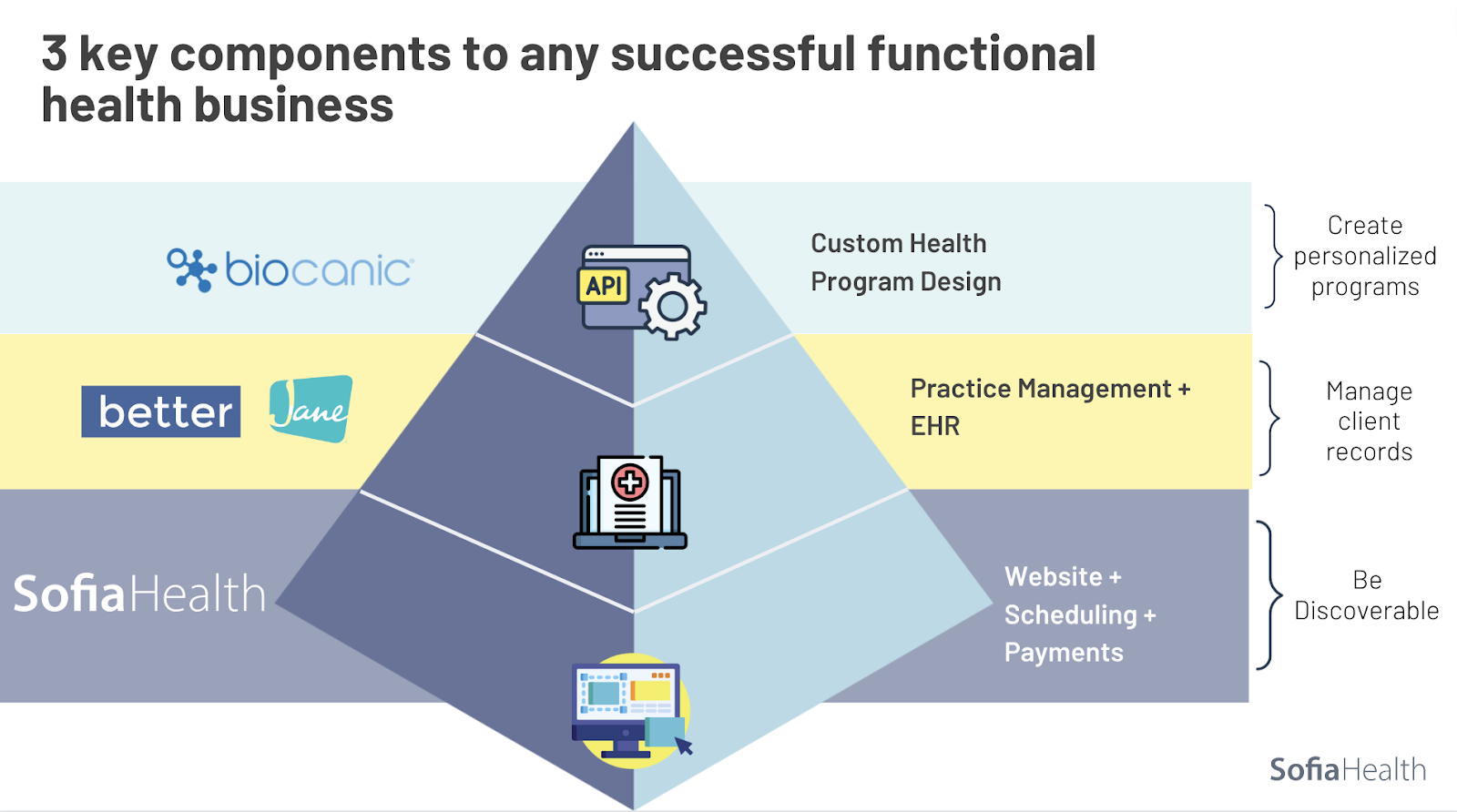
If you are looking for help getting your business online and in front of potential clients, you can set up your business using the Sofia platform. Sofia gives you the business tools you need, including a website, two-way calendar sync for scheduling, payments, and client messaging. Best of all, your services are listed on the marketplace where clients are already searching for support.
Marketplaces help connect consumers with services and products. Think of Care.com or Amazon, for example. If you sell products, you would want them listed on the right marketplace to help drive sales. If you are a babysitter, you would want your services listed on Care.com.
For more on how marketplaces can help you grow your business, check out our article “Best Sites to Sell Online: 10 Marketplaces for Selling Goods or Running a Business”
Mastering the Business of Health Coaching
We’re going to break this into two parts.
First, if you are just getting started as a brand-new health coach, you only need your skills and your first client. For initial business operations, you should make sure you have a few fundamentals in place to protect yourself and your business.
- Your skills and appropriate certifications
- A client
- Proper state licensing, if required
- A business structure
- Insurance
Very simple. You do not need a fancy website or complex marketing strategy to begin.
Second, for those who want to build their practice as either a side business or a full-time career, it’s time to think about how you will prepare to take on more clients.
Yes, many people say to focus on your business name and niche first. But before focusing heavily on branding and marketing, it’s important to make sure you can handle more than one client. Your niche and brand can evolve as you gain more experience.
Remember, clients need your help. They care more about what you can provide for them than what your logo looks like. Don’t let branding decisions stop you from getting started.
When you are ready to grow, it’s time to look at business operations such as:
- Scheduling
- Payments
- Pricing
- Handling inbound client requests
- Budgets
- Professionalism, including having a basic website where people can learn about your services and book with you
- Client documentation, such as an EMR, shared Google document, or app
Once you have your fundamental operations in place, you can turn to marketing to help create a steady flow of clients. After doing your research, choose a few strategies you are interested in testing.
Marketing Your Business
Marketing is an iterative process. As a business owner, you will always be testing new strategies to see what works best for your business. In the meantime, we recommend becoming visible in the places where clients are already searching for services.
This means making sure your business is discoverable when clients go online to search for services and products like yours. Be visible on Google and on sites like Sofia.
When you have the infrastructure in place to take on more clients, you can turn your attention to marketing. Here are some tried-and-true methods for marketing your business:
Content Marketing
- Blogging: Share tips, advice, and information on health and wellness topics to attract potential clients and establish yourself as an expert in the field. You can also share your blogs with other sites, which may help build backlinks and increase your credibility.
- Video Tutorials: Create engaging and informative videos on various health and wellness topics to share on your website and social media channels. Similar to blogging, try to share your videos with high-profile and established sites when possible.
- Social Media Posts: Regularly post relevant and informative content on social media to keep followers engaged and interested in your services.
- Infographics: Use visual aids to share information on health and wellness topics and make complex information easier to understand.
Networking
- Industry Events: Attend conferences and trade shows related to health and wellness to meet potential clients and collaborate with other industry professionals.
- Local Business Partnerships: Partner with local businesses, such as gyms, nutrition stores, and private practices, to cross-promote your services and reach a wider audience.
- LinkedIn Connections: Use LinkedIn to network and build relationships within the health and wellness industry.
Email Marketing
- Newsletters: Regularly send newsletters to your email list with updates about your services, new blog posts, and promotional offers.
- Promotional Offers: Create special promotions and discounts for your email subscribers to encourage them to book sessions with you.
- Educational Materials: Share educational resources and health and wellness tips with your email subscribers to establish yourself as an expert in the field.
Paid Advertising
-
Targeted Ads: Use targeted ads on social media platforms, such as Facebook and Instagram, or through Google Ads to reach potential clients who are interested in health and wellness services.
-
Relevant Keywords: Use relevant keywords in your ads to ensure they are shown to people searching for health and wellness services.
Referral Marketing
- Encourage Referrals: Encourage current clients to refer friends and family to your services by offering incentives, such as discounts or bonuses.
- Show Appreciation: Show appreciation to clients who refer others to your services by offering special perks or incentives.
Collaboration
- Partner with Complementary Businesses: Partner with businesses that offer complementary services, such as fitness professionals, therapists, or nutritionists, to cross-promote your services.
- Joint Workshops and Events: Offer joint workshops and events with other industry professionals to educate and engage potential clients while reaching a wider audience.
- Other Providers: You can find other providers who share your audience but offer different products or services on Sofia Health. Create collaborations with service and product providers to give your current and future clients more value.
Public Speaking
- Workshops: Offer workshops or speaking engagements to educate and engage with potential clients.
- Group Presentations: Give presentations to groups, such as community organizations or corporate wellness programs.
Social Media Influencer Marketing
- Partner with Influencers: Partner with social media influencers in health and wellness. Be aware that influencers with significant followings often charge large fees in exchange for a post. If this is a strategy you want to try, you can start with smaller influencers.
Regardless of which method you want to focus on first – don’t make the mistake of taking on too many at once – you should set aside dedicated time each week to market your business. Some entrepreneurs set aside an entire day for this — Marketing Monday — and spend the day focused on creating new avenues for finding new clients. The bottom line is you need to focus on providing excellent customer service and targeted marketing to make your wellness coaching business a success.
Ways to Make Money as a Health Coach
There is always room for people who are creative, dedicated, and willing to make their business work. Don’t box yourself in. Most successful health coaches have multiple income streams. Offering products and other services in addition to health coaching allows you to reach a broader audience. Think of your audience as concentric circles that get smaller toward the middle.
In the outer circle, you have people who follow you on social media or read your blog. This is the largest part of your audience. You are providing value to them, but they are not your direct customers yet.
The next circle consists of people who have shown interest by signing up for your email list or making a small purchase. Further in are people who buy your mid-level offerings, such as e-books, self-paced courses, or products.
The smallest circle consists of your true fans. These are the people who are excited about everything you do. They have bought your most expensive offerings and are your biggest cheerleaders. They are also the ones most likely to spread the word and bring you more customers.
Not everyone will sign up for personal coaching, but if you offer an e-book or self-paced course, you can still reach customers who may not be able to afford your one-on-one services. You will also be building your future customer pipeline. If someone buys your e-book today, they may be more likely to buy personalized coaching or your premium course later.
When designing your income streams, think about the people in each of your concentric circles. Create products and services that reach customers at every level. Some of the ways you can generate income as a health coach include:
1:1 Coaching
Offering personal 1:1 coaching is a great way to get to know your clients and guide them through changes that can have a meaningful impact on their health. You may want to start with an initial consultation and a set number of follow-up visits. Another option is offering a set number of sessions for a fixed fee or creating packages and programs.
Although 1:1 coaching offers many benefits, it is often not enough to sustain your career on its own. One challenge with this model is that you are exchanging your time for money. You only have so many hours in a day, so once your available time slots are filled, it becomes difficult to scale your income.
The hours you spend in 1:1 coaching also require a significant investment of time and energy, so you may not be able to fill your schedule with back-to-back clients.
Group Coaching
You can reach more clients at once by offering more generalized group sessions. Group classes and workshops can also serve as an introduction to your services and encourage participants to sign up for your 1:1 coaching sessions later.
With a group coaching model, each participant pays less than they would for individual coaching, but collectively, the group can generate more than your one-on-one hourly rate. You can expand this option even further by offering virtual group coaching sessions through Zoom or another video platform.
Another option is offering a monthly group support meeting focused on a particular health issue or wellness goal.
Online Courses
Online courses are becoming an increasingly popular way for health coaches to share their knowledge and skills with clients and students. With the rise of plug-and-play technology platforms, it is easier than ever to create and deliver online courses, making them a great way to reach a wider audience and grow your business.
Online courses allow you to go into greater detail than you can during limited in-person or real-time sessions. They also allow your customers to move through the material at their own pace and on their own schedule.
Once you have invested the time and effort into creating an online course, you can continue to sell it indefinitely, creating a potential passive income stream. One popular option for creating online courses is to use pre-built platforms. Platforms such as Kajabi, Udemy, Coursera, and Skillshare allow you to create and sell your course without any technical expertise.
These platforms provide user-friendly tools for creating and uploading your course content. Once you have created your content, don’t forget to add your course to your Sofia business site.
Digital Products: E-books, Videos, Guides
There are many digital products you can create to share your knowledge, including:
E-books: E-books are a convenient and accessible format that can be easily shared and distributed online. An e-book is a great way to build your brand and establish yourself as an authority in your field. You can sell your e-book or offer it as a lead magnet when people sign up for your email list.
Videos: You can create a workout series, a healthy cooking series, lectures on specific conditions, or any other video content your audience will find useful.
Guides: Creating a guide to help people with specific health conditions can be another income stream. For example, you could create a multimedia guide to getting started on a low-FODMAP diet, including videos, audio, graphics, and other printable resources.
Physical Products
You can also sell products to generate income in your wellness coaching business. These can be products you buy wholesale or products you make yourself. You can offer them alongside your coaching sessions, on your website, or both.
Some examples of products you can sell include:
- Nutritional supplements
- Diet or exercise plans
- Fitness equipment
- Self-care and wellness products, such as skincare creams
- T-shirts or other apparel
Next Steps to Build Your Health Coaching Career
So, what is the best way to make money as a health coach? It depends.
The ways you can make money will depend on how much effort you are willing to put in and what you enjoy doing.
There is no one-size-fits-all approach to making money as a health coach. This career field is growing and gives health coaches the ability to set up multiple income streams. There are also opportunities to work for companies, clinics, spas, and hospitals. For a full list of opportunities, read “Careers in Health Coaching.”
Regardless of which income streams you set up for your health coaching business, Sofia Health can be a valuable partner. Our customer acquisition platform was designed with the modern health coach in mind. You can check out other health coaches, see how they are running their businesses, and set up your own practitioner page so your ideal clients can discover you.
Take advantage of our like-minded community to set up strategic, mutually beneficial partnerships and learn from others who have walked in your shoes. Sign up today to get started with Sofia Health.
